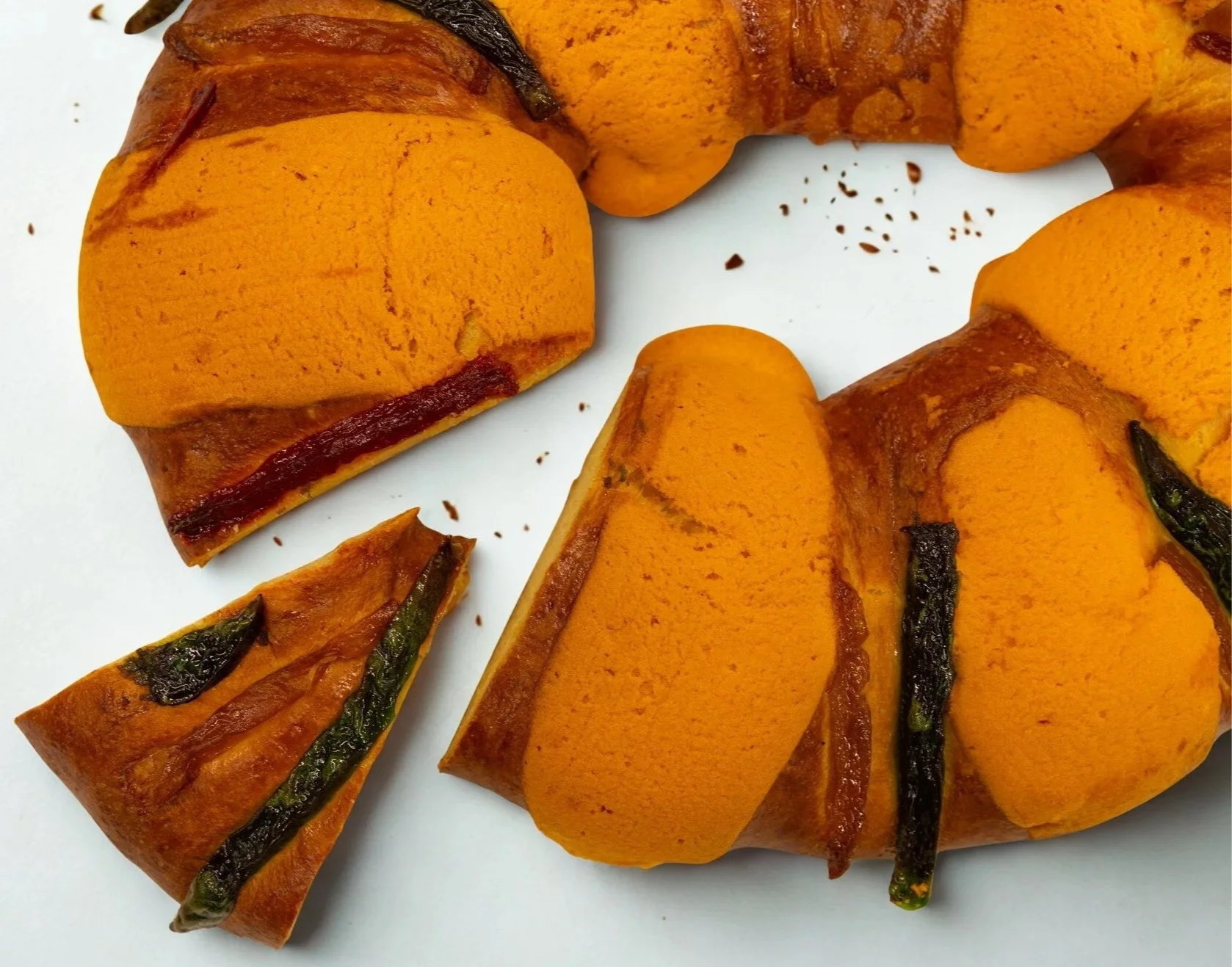
Rosca de Reyes History
El Día de los Reyes—Three Kings Day—is a celebration many of us hold close to our hearts. It’s a day filled with family, warmth, and the joy of cutting into a Rosca de Reyes. The sweet smell of fresh bread, the bright candied fruit glistening on top, and the thrill of discovering (or carefully dodging!) the hidden baby figurine make this tradition one we eagerly await each year.
Yet behind the fun lies a beautiful history rooted in faith, culture, and storytelling. Why do we shape this bread into a circle? What do the vibrant colors represent? And how did a tiny Baby Jesús figure make its way into the dough? Grab your café or chocolate caliente—we’re about to journey into the past.
Where Did Rosca de Reyes Come From?
The Rosca’s story begins in medieval Europe, particularly in France, where people celebrated Epiphany—the visit of the Three Wise Men—with sweet round cakes. Inside each cake bakers hid a small bean, and whoever found it was named King for the day, celebrated with laughter, crowns, and good luck for the coming year.
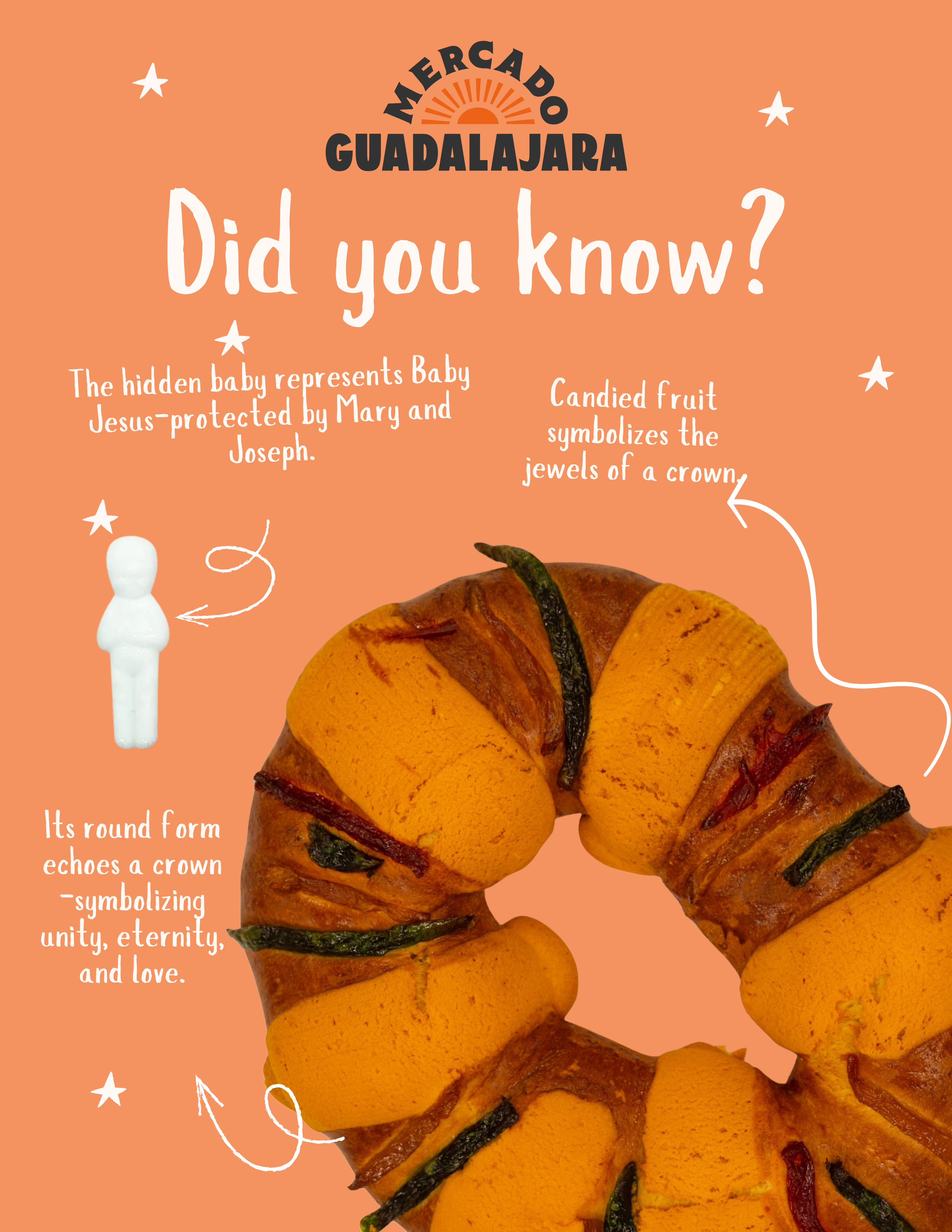
As the tradition spread into Spain and later across the Americas, Catholic influence added new symbolism. The bean was eventually replaced with a small figurine of Baby Jesus, representing the Holy Family’s effort to protect him from King Herod. This simple pastry became a sweet reminder of hope, faith, and light in times of uncertainty.
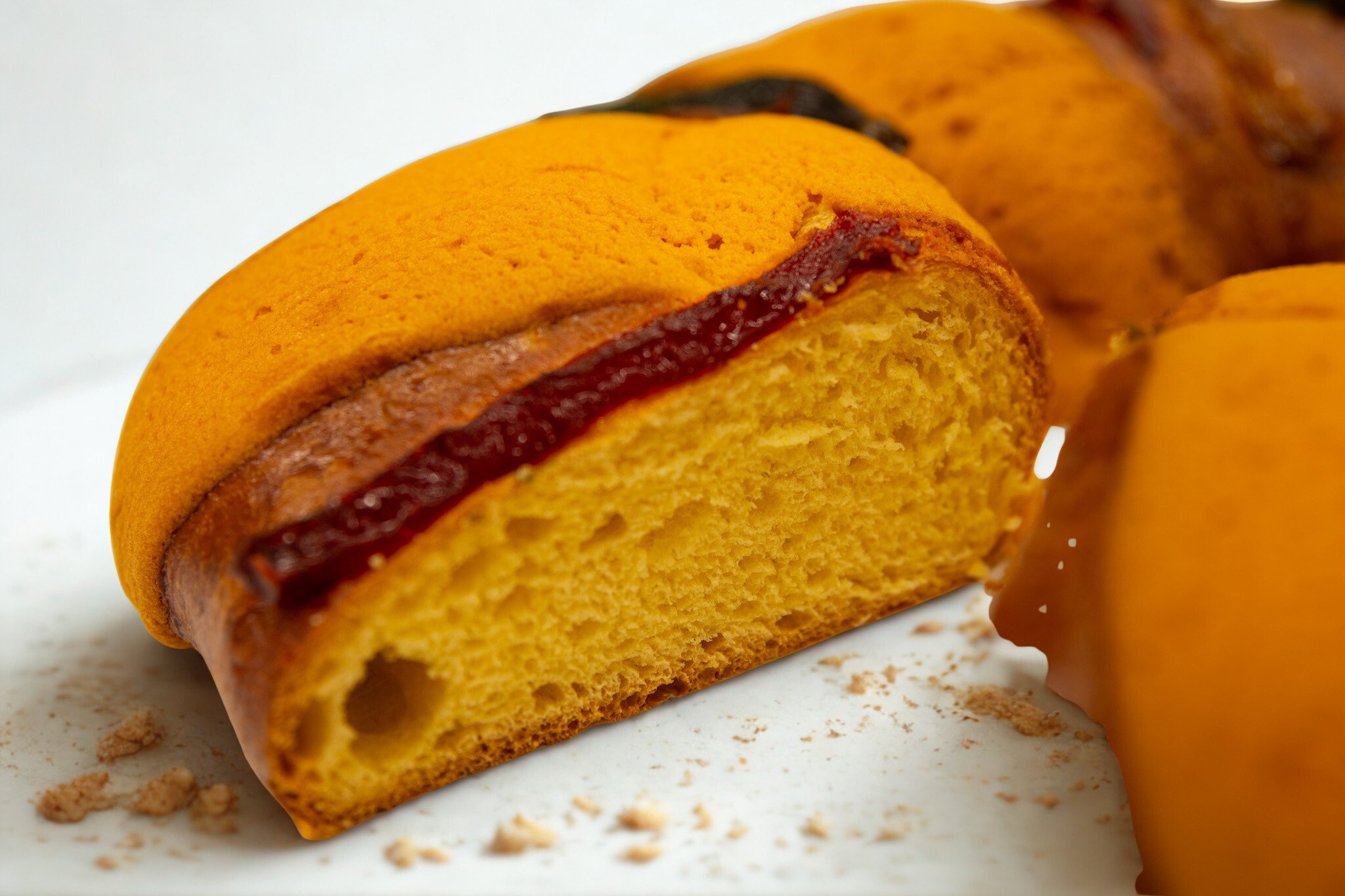
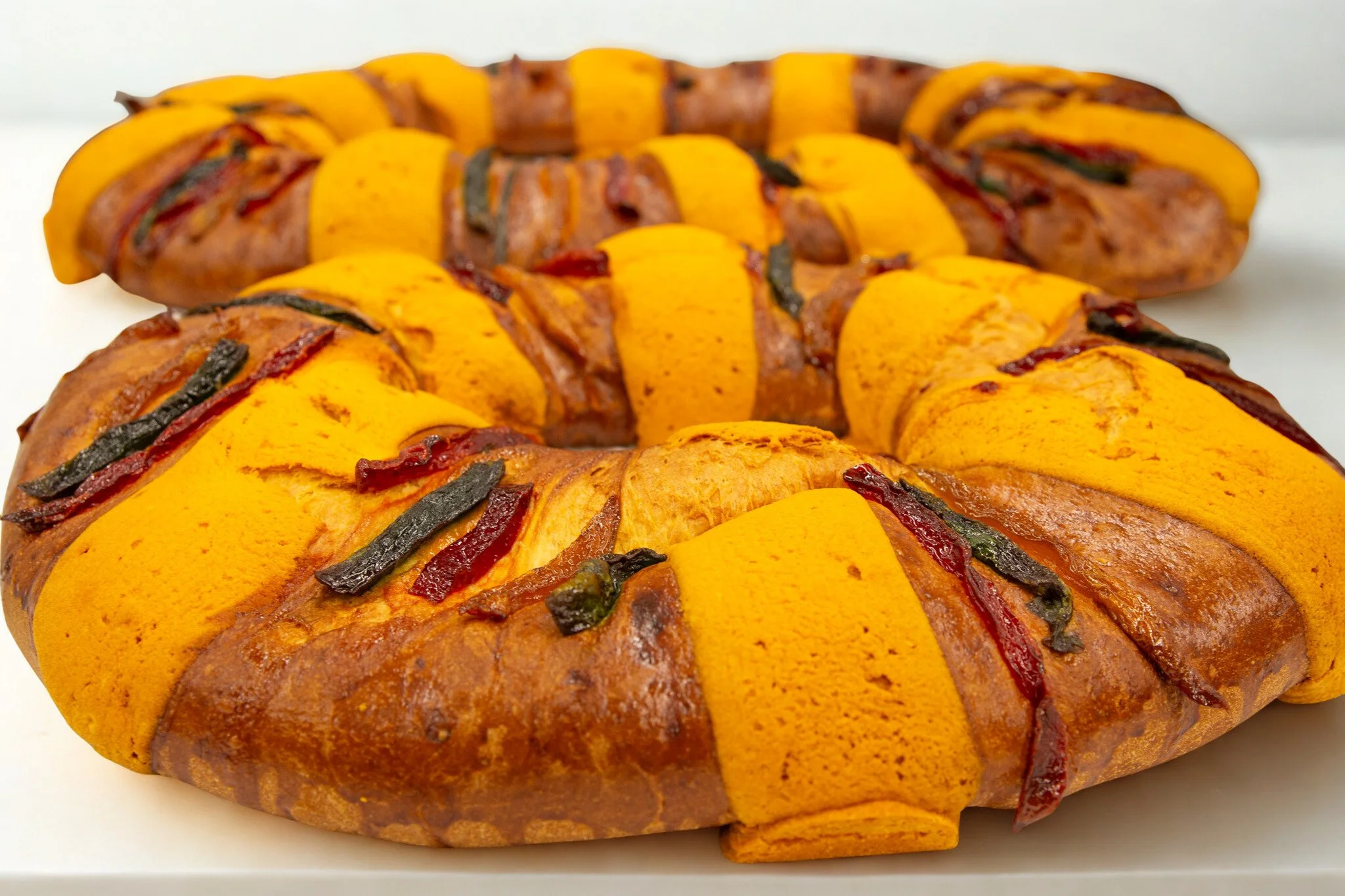
The shape of the Rosca is equally meaningful. Its round form echoes the shape of a crown and reflects God's everlasting love—continuous, unbroken, and eternal. The colorful toppings—often quince, figs, nopales, or cherries—symbolize the jewels of the kings who visited Bethlehem. Their colors also carry meaning:
Gold represents power and the divine
Green symbolizes faith and hope
Red reflects love and spiritual strength
From Europe to Mexico to countless homes today, the Rosca has traveled through generations, retaining not only flavor but deep cultural significance.
A Tradition Meant to Be Shared
At the heart of Día de Reyes is community—gathering around the table, slicing the Rosca, and holding your breath as each piece reveals its surprise. If you’re the lucky one who finds the plastic baby, ¡Felicidades! You are named compadre or comadre of Baby Jesus for the year.
This honor comes with a joyful responsibility: hosting Día de la Candelaria on February 2nd. Families come together once again to enjoy tamales, atole, champurrado, café de olla, or hot chocolate, continuing a cycle of togetherness, gratitude, and celebration.
What began as a medieval cake is now a symbol of unity—reminding us that tradition lives not only in recipes, but in the memories we create around them.